Opened with great fanfare in 1961 and placed on the auction block just three years later, Lake Placid’s landmark survived because one owner after another kept searching for a way to make the difficult enterprise work.
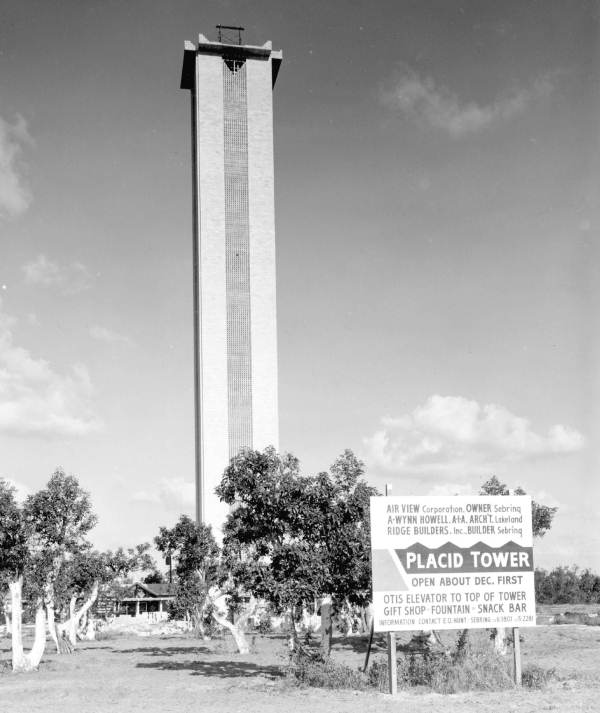
E.O. Hunt believed Highlands County’s beauty could not be fully appreciated from the ground. An architectural engineer from Sebring, Hunt conceived the idea for Placid Tower after flying over the area and seeing its lakes, groves and rolling ridge country from above.“He thought the area was beautiful, but felt people couldn’t appreciate it because the terrain was so flat,” his widow, Mayme Hunt Lindsay, later recalled. “He wanted to build something that people could look from and enjoy.”
Five families, including the Hunts, joined together to finance the venture. Construction began in early 1960, with Ridge Builders of Sebring handling the work. Before the tower was finished, Hurricane Donna crossed Florida. The structure had reached approximately the 200-foot observation level, and the investors expected to find broken glass and considerable damage. Instead, the unfinished tower survived virtually untouched. “We knew then that the tower was meant to be,” Lindsay said.
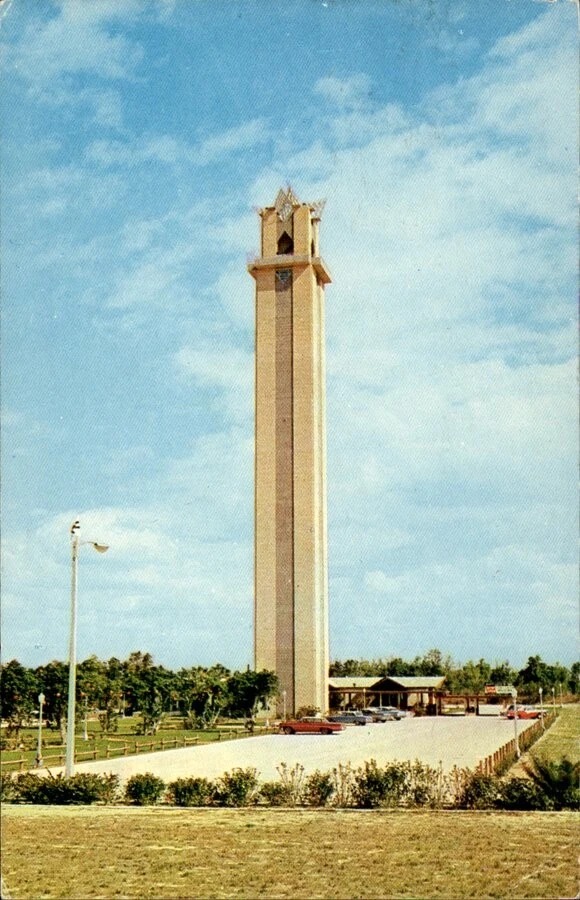
Placid Tower officially opened Jan. 1, 1961. Its promoters planned a three-week celebration, offered $7,000 in prizes and advertised a fireworks display from the top. The tower ride was only one part of the original attraction.
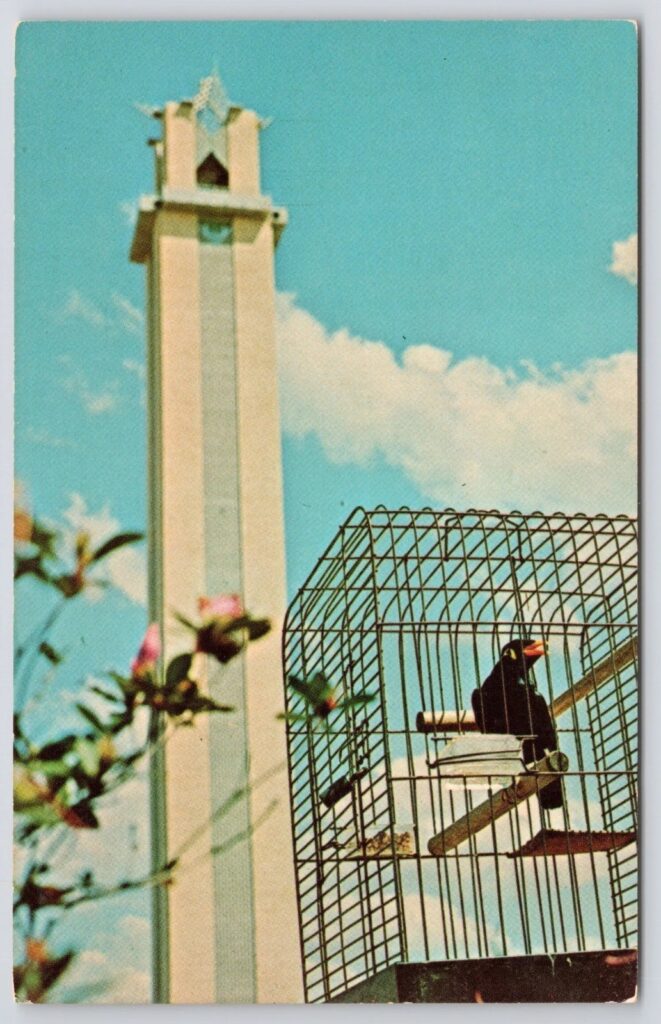
Visitors found an alligator pit, bears and other native Florida animals, tropical birds, fantail pigeons, picnic areas, miniature golf, a snack bar and a gift shop. “Joe,” the resident mynah bird, reportedly greeted visitors with his own sales pitch: “Ride the elevator, it’s worth the money.”
Advertisements offered free orange juice and promoted cameras, film, binoculars, fresh fruit, bonded fruit shipping, refreshments and a planned clothing shop called Tower Fashions. Adults could ride for 50 cents and children for 25 cents. A coupon offered another discount toward either a purchase or the elevator ride. It was an ambitious attempt to turn a stop along two-lane U.S. 27 into a destination.
But the tower was a difficult enterprise almost from the beginning. In 1964, only three years after it opened, the property went on the auction block. A newspaper account reported bluntly that the attraction apparently had not been financially successful. Another article reported that Jean and Jerry Whitaker purchased it for $100,000 and assumed a mortgage of more than $62,000. They said they would continue operating it as a tourist attraction.
The early auction is central to the tower’s history. Its troubles did not begin decades later with Walt Disney World, interstate travel or changing vacation habits. Those developments eventually made the competition harder, but the challenge of earning enough money to support the tower was already apparent by 1964. Some blamed the opening of the turnpike, as its convenience took traffice from US 27.
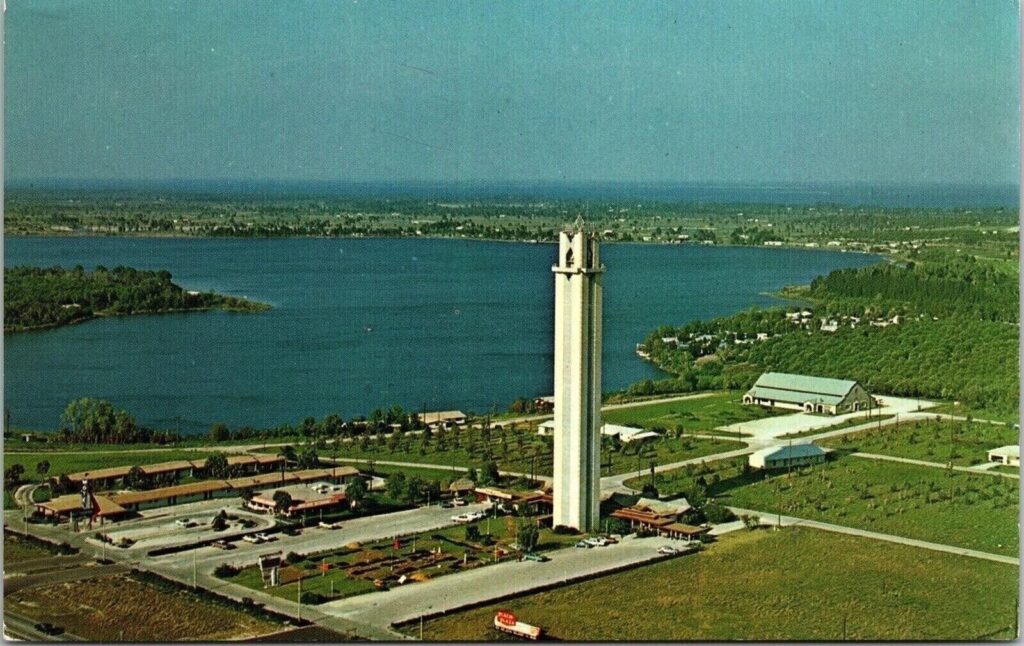
The Whitakers expand the attraction
The Whitaker brothers continued the search for a workable formula. They expanded the gift shop and added a women’s clothing store. Advertising from the period promoted free orange juice, fresh fruit, tropical birds, Tower Fashions and what was described as one of Florida’s finest gift shops. The property also housed the Tower Realty Bureau, which offered visitors maps and information about homes, groves and property in the Lake Placid area. The tower was more than an attraction; it was being used to bring people into a larger commercial and real estate operation. The Whitakers also understood the value of publicity.
When a Canadian man asked whether his sister could be married at the top of the tower, the unusual ceremony grew into a promotional event. Mayors, government officials, civic leaders and business owners were invited, along with friends flying in from Montreal. Supporters believed the wedding would bring attention—and more people—to Lake Placid. For a time, the expanded approach appeared to help. A later history said the tower flourished under the Whitakers as they enlarged the gift shop and added the clothing business.
But the basic challenge remained: the view might persuade motorists to stop once, while shops, food and other attractions were needed to make the overall property sustainable.
Happiness Tower
In 1974, caladium and ornamental plant grower Paul Phypers Sr. purchased the complex and renamed it Happiness Tower, connecting it with his nearby Happiness Farms. Phypers expanded the property again and restocked the gift shop with merchandise intended to appeal to the changing tourist market.
The tower still attracted a loyal following. In 1982, manager Barbara Heitzenrater said between 100 and 200 people visited each day during tourist season. Adults paid $1 and children 50 cents. Many winter visitors returned year after year. Heitzenrater said she knew some by name and became concerned when familiar customers did not return. “They are people who come in every year,” she said. “I get a little worried when they don’t come in, because most of them are older and retired.”
Another effort to give the tower a distinctive purpose came when a Christian broadcaster opened the “Prayer Room in the Sky.” Plans were announced for a television studio in the parking lot that would produce religious programming. The prayer room eventually closed, and the studio was never built. By then, Florida tourism was changing. Larger attractions were drawing vacationers toward Central Florida, while highway improvements allowed travelers to move faster and stop less frequently.
Phypers also became involved in a serious dispute with the Internal Revenue Service. In the spring of 1983, the IRS padlocked the tower, claiming $412,000 in unpaid taxes. Happiness Attractions entered bankruptcy.
The Ibrahims build a marketplace
Dr. George Ibrahim and his wife, Jean, purchased the property out of bankruptcy in November 1984 and restored the name Placid Tower.They reopened the observation tower and extensively remodeled the commercial space at its base.George Ibrahim said he had not purchased the tower simply as an investment. “The reason I bought that tower was to help this town,” he said.
The Ibrahims’ plan relied on turning the ground floor into a marketplace for residents as well as tourists. Renovations included a new ceiling, brick around the pillars, carpeting, cedar finishes and a planter with seating. Tower Drugs, Tower Travel and KIS Photo opened at the base. The pharmacy promoted discounted prescriptions, while KIS offered one-hour film processing. Elliott Optical later operated in the plaza, arranging eye examinations and selling glasses. There were also discussions about a dress shop, landscaping, a greenhouse and a possible medical complex.
The marketplace continued, but the tower ride again proved difficult to support. By 1988, Jean Ibrahim said the tourist attraction had been closed because liability insurance cost approximately $25,000 a year. She later said the tower was unprofitable, although the plaza remained open. The difference was becoming clear: offices and shops could produce regular rent even when the observation decks were closed. The tower gave the property its identity, but operating it required insurance, elevator maintenance, staffing and repairs.
Mortgage disputes eventually sent the property back into court. Lawsuits, bankruptcy claims and allegations involving structural cracks were followed by courthouse and foreclosure auctions. Barnett Bank of Highlands County became the sole bidder at a January 1991 auction, offering $288,649.06. By then, the tower had been closed almost continuously since 1983. People still came. Peggy Reapsummer, one of the few remaining plaza tenants, said tourists continued to arrive expecting to ride to the top. Some travel publications still listed the attraction as open. “You can see them pile out of their car and go up and see the closed sign on the door,” she said.
Part 2 – 1992 to present to follow